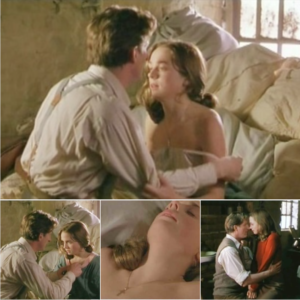
Beau-père (1981) is a French drama that confronts taboo themes with restraint and psychological depth. Directed by Bertrand Blier, the film is less about provocation and more about emotional confusion, grief, and moral boundaries tested by loss.
The story begins after the sudden death of Marion’s mother. Left emotionally unanchored, the fourteen-year-old girl struggles to process her grief and loneliness. In this vulnerable state, her attachment to her stepfather, Remy, slowly transforms into romantic feelings.

Rather than presenting the situation as sensational, Beau-père focuses on internal conflict. Marion’s emotions are portrayed as raw and confused, while Remy is shown wrestling with guilt, responsibility, and the weight of social and moral limits. Much of the tension lies in what is left unspoken.
The film uses quiet pacing and intimate framing to emphasize psychological realism. Silence, everyday routines, and subtle gestures replace dramatic confrontation, making the emotional discomfort feel more authentic and unsettling.