Une femme douce (1969) is a haunting psychological drama that examines marriage, control, and emotional isolation. The film opens with a shocking act, as a young woman takes her own life, leaving her pawnbroker husband overwhelmed by grief and confusion.
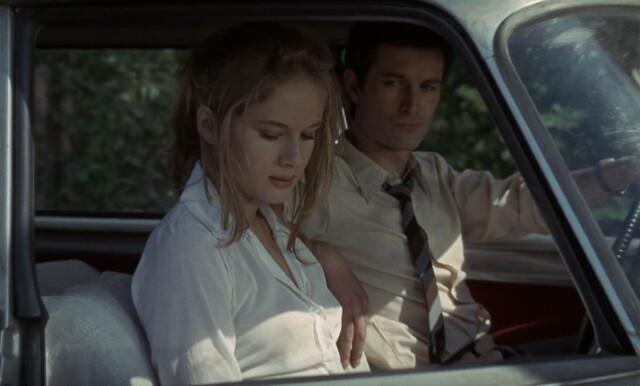
Through a series of flashbacks, the story slowly reveals how the couple met and married, offering insight into a relationship shaped by imbalance and silent tension. The husband’s rigid worldview and desire for dominance clash with the woman’s inner life, creating a growing sense of suffocation and despair.
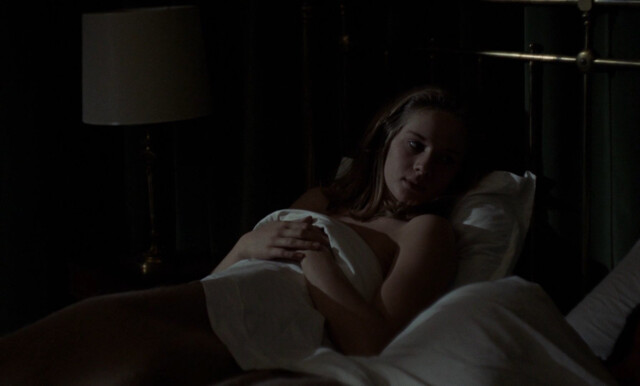
The film’s restrained style mirrors the emotional distance between the characters. Long silences, careful framing, and minimal dialogue allow the audience to feel the weight of unspoken conflict. Rather than providing clear answers, the narrative invites reflection on responsibility and emotional neglect.
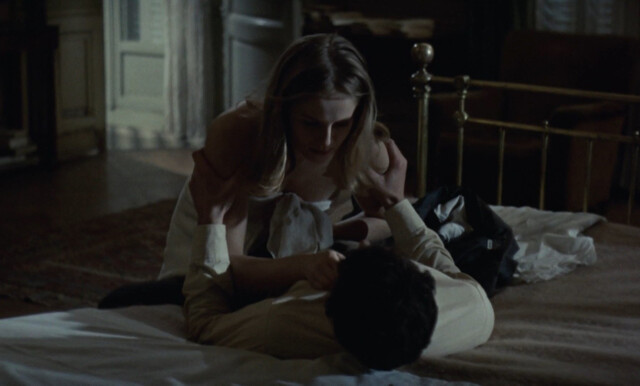
As her alienation deepens, the woman briefly considers murdering her husband, not out of hatred, but as a desperate response to feeling trapped. Her inability to commit violence underscores her profound helplessness and highlights the tragedy of her situation.