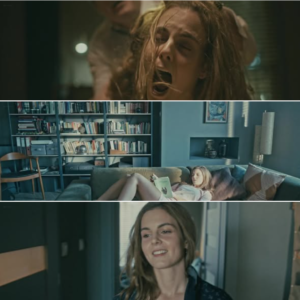
The Guest (2025) begins with a family living in a surface-perfect calm, the kind that looks unbreakable from the outside. Their world feels orderly, predictable, and neatly maintained—until an uninvited visitor crosses their doorstep and quietly unravels everything they’ve built. The intrusion is subtle at first, like a cool draft slipping through a closed window, but it quickly grows into a force that no one in the house can ignore.

The film thrives on tension that spreads slowly, guided by buried secrets rising like long-forgotten echoes. As the guest settles in, each family member begins to shift, revealing cracks beneath the polished exterior. Conflicts simmer, loyalties strain, and the stability of the household starts to tilt. What was once a peaceful routine becomes a pressure chamber filled with unspoken fears and unpredictable reactions.
One of the film’s strongest elements is its unexpected political edge. The arrival of the guest doesn’t just disrupt relationships—it exposes power dynamics hiding beneath the surface. Ideologies clash, personal beliefs turn volatile, and the living room becomes a battleground where every conversation feels loaded. The story uses the household as a miniature arena for broader societal tensions, creating a sense of unease that lingers long after each scene ends.

The Guest blends psychological drama with social commentary, delivering a narrative that grows tighter and more chaotic as secrets continue to unfold. It shows how one unexpected presence can shift the balance of an entire family, sending their carefully arranged lives into a downward spiral.