The Dreamers (2003) sweeps viewers into the feverish pulse of Paris during the spring of 1968, a moment when political revolt and artistic passion were rewriting the city’s identity. Yet instead of following the crowds in the streets, the film draws us into a more intimate revolution—one unfolding behind the walls of a grand Parisian apartment where three young cinephiles build a world of their own making.

Matthew, a shy Californian student studying abroad, finds himself pulled into the orbit of twins Theo and Isabelle. They are creatures of cinema and philosophy, living as though life were a daring experiment designed only for those bold enough to break the rules. With their parents conveniently away, the twins invite Matthew into a private realm of games, arguments, sensuality, and reckless curiosity.

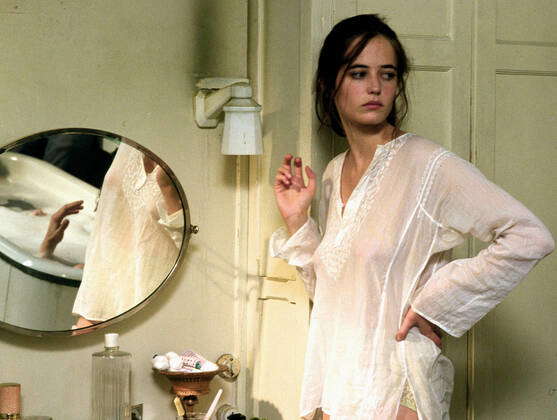
The apartment becomes a sanctuary suspended from time, a playground where all senses are amplified. The trio watches films, debates ideals, and pushes boundaries—sometimes gently, sometimes violently. As their connection deepens, their exploration turns increasingly intimate, blurring emotional and physical lines they never imagined crossing. Each day intensifies the fragile chemistry between them, revealing desire, insecurity, and an innocence slipping quietly out of reach.
While the threesome binds them together, the outside world beats against the windows with growing urgency. The student uprisings swell through Paris, challenging the very structures they themselves are unconsciously rebelling against. Eventually, the chaos beyond their sanctuary forces its way in, shattering the fragile world they created and exposing the emotional fractures beneath their experiments.